

Optimize OPEX - Ready to take control of your energy consumption?
Discover in our case study how switching from distillation to melt crystallization can slash your energy costs by 40% and reduce CO₂ emissions by over 50%.
< 40% cost reduction
Dramatically reduce your annual operating expenses.
< 50% CO2 reduction
Achieve substantial environmental gains.
Enhanced reliability
Lower operating temperatures and maintenance requirements.
Download the case study and get exclusive insights into the process and energy optimization opportunity on the example of glacial grade acetic acid production.
- Competitive advantage - Stay ahead of industry trends by adopting hybrid separation technologies that deliver superior environmental and economic performance.
- Proven ROI results - Access data showing 40% OPEX reduction and 50% CO₂ emissions cut for the acetic acid and consider how it could be integrated into your process.
- Immediate implementation roadmap for acetic acid - Get practical guidance on transitioning your existing distillation setup to melt crystallization technology with maximum efficiency gains.
- Risk mitigation strategies - Learn how lower operating temperatures and reduced thermal stress translate to decreased maintenance costs and improved operational reliability.
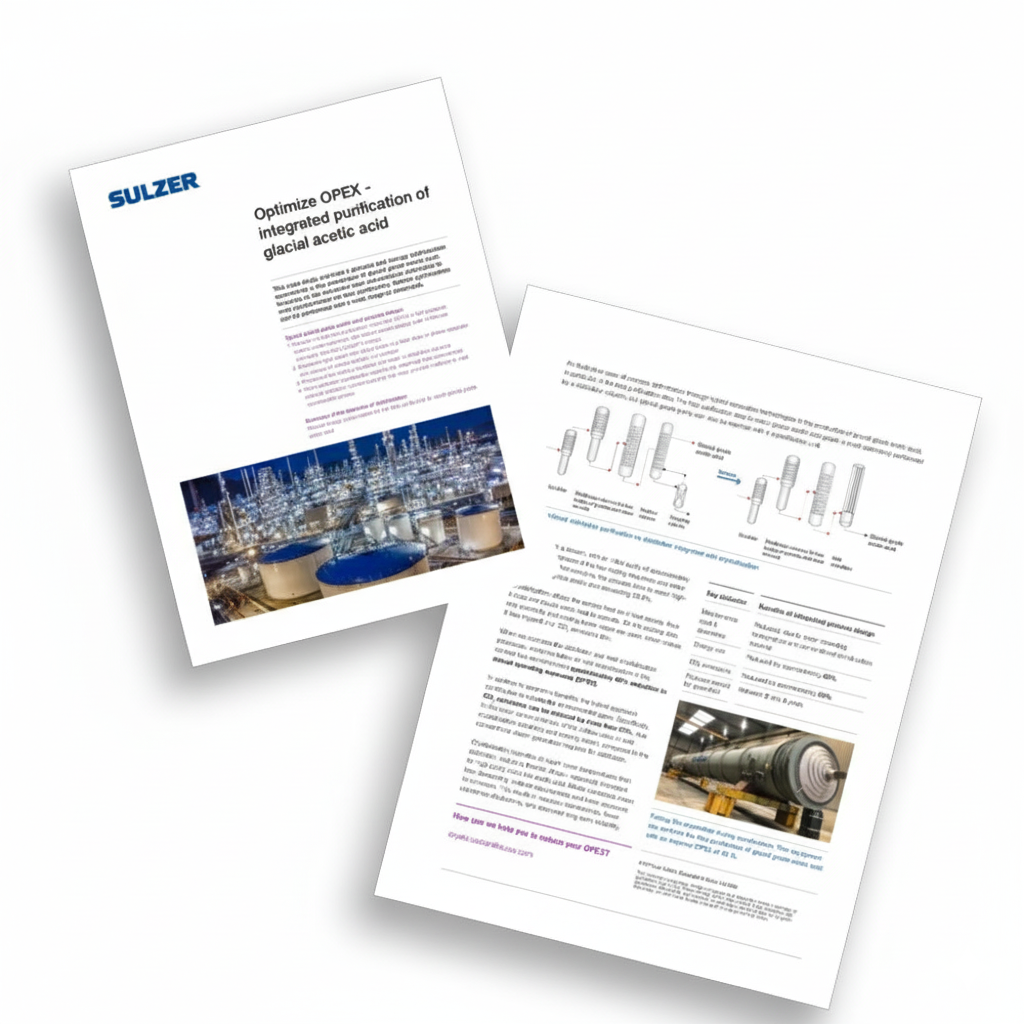
Why this case study is essential for your operations.
- Discover how a clear system overview can turn operational cost savings into a tangible reality.
- Learn why a fast ROI and minimal upfront investment make this a low-risk, high-impact opportunity.
- See how mastering mass transfer processes leads to smarter optimization of even the most complex operations.
Looking to reduce OPEX or optimize your processes using melt crystallization technology? Contact our team at crystallization@sulzer.com to discuss your application.
Ready to transform your acetic acid production?
Join leading chemical manufacturers who have already optimized their processes using melt crystallization technology. This comprehensive case study provides everything you need to make an informed decision about upgrading your purification process.
Don't let your competitors gain the advantage. Download this exclusive case study and start your optimization journey today.
✅ 40% OPEX reduction potential
✅ 50%+ CO₂ emissions cut
✅ 99.9%+ glacial grade purity
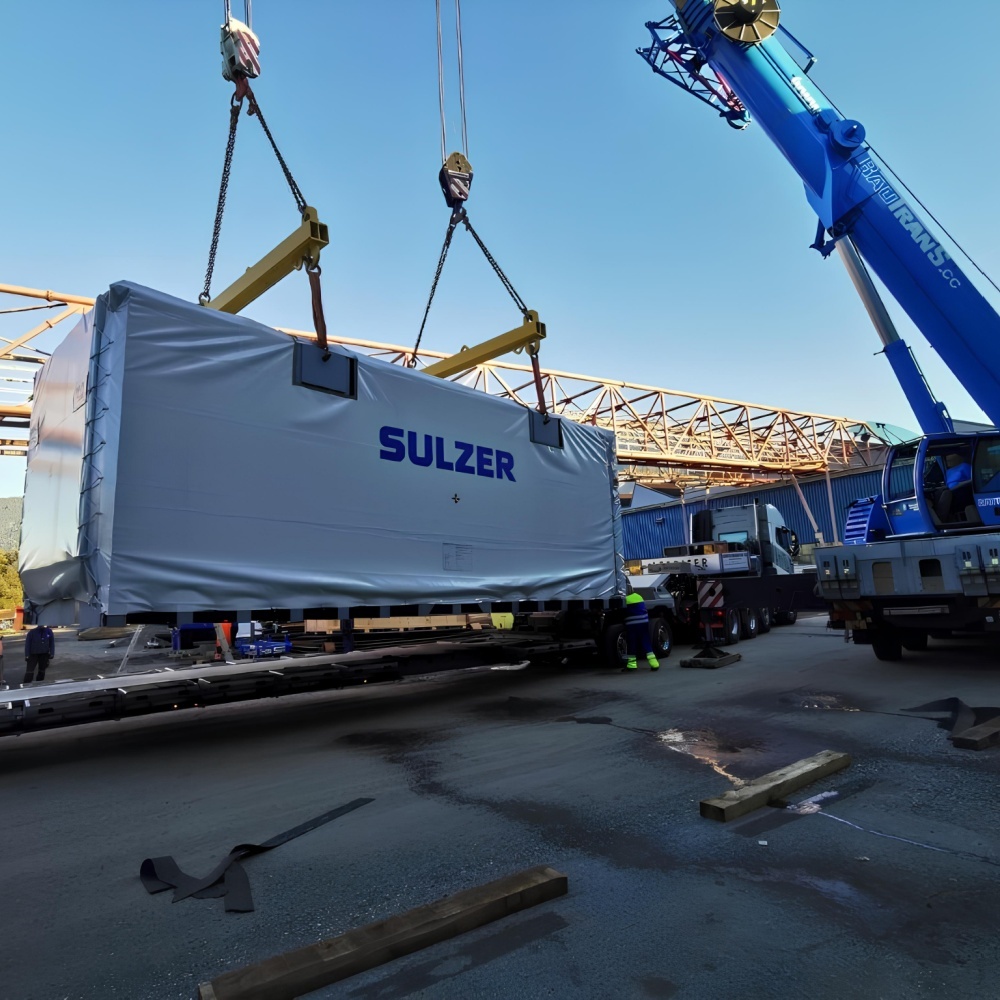
Yes. Many products can benefit from this integrated approach. Sulzer has a vast portfolio of mass transfer technologies, such as distillation, evaporator, liquid-liquid extraction, absorption and crystallization, and has the capability to integrate all these systems to optimize OPEX and reduce CAPEX.
Yes. Integrated design can be applied to both greenfield and brownfield projects. In existing plants, it enables debottlenecking, energy recovery, and improved flexibility with minimal disruption.
Energy savings up to 40% are achievable through thermal integration, hybrid configurations, and solvent-free purification steps like melt crystallization.
Yes, melt crystallization is solvent-free. This method reduces waste, enhances safety, and supports compliance with increasingly strict regulations.
Basic feed composition, target purity, and process constraints are sufficient to begin. Sulzer can provide integrated flowsheets and propose tailored solutions.