From promise to reality: The path to commercial-scale e-fuel production
As industries worldwide accelerate their race toward net-zero emissions by 2050, e-fuels or synthetic fuels produced from renewable electricity, water and captured CO₂ are emerging as a critical solution to decarbonize the most challenging sectors. Aviation, shipping and heavy transport, which collectively account for over 16% of global CO₂ emissions, face unique decarbonization challenges that battery technology alone cannot solve. For long-haul flights, transoceanic shipping and heavy freight transport, the energy density and existing infrastructure compatibility of e-fuels make them essential to achieving climate goals.
However, the journey from promising pilot projects to commercial-scale production remains fraught with significant technical, economic, and regulatory challenges. While companies like Norsk e-Fuel in Norway and HIF Global in Chile have successfully demonstrated e-fuel production at smaller scales, scaling up to meet global demand requires overcoming substantial hurdles.
Cost competitiveness: the economics of scale
The most significant barrier to e-fuel adoption is achieving cost parity with conventional fossil fuels. Currently, e-fuels cost 3-10 times more than their fossil counterparts, with synthetic sustainable aviation fuel (SAF) priced at $3'000-6'000 per ton compared to conventional jet fuel at around $600-800 per ton.
Power-to-X technology scaling
The heart of e-fuel production lies in Power-to-X (PtX) technology, which converts renewable electricity into synthetic fuels through various pathways:
- Power-to-Liquids (PtL): Converts green hydrogen and captured CO₂ into liquid hydrocarbons via the Fischer-Tropsch process
- Power-to-Ammonia: Converts renewable electricity to ammonia for shipping fuel and fertilizer applications
- Power-to-Methanol: Produces e-methanol through CO₂ hydrogenation
European Energy's pioneering e-methanol facility in Denmark, operational since 2023, demonstrates the commercial potential of PtX technology. Using 50 MW of renewable electricity, the plant produces 32’000 tons of e-methanol annually, demonstrating how dedicated renewable energy integration can improve economics.
Cost reduction strategies include:
- Economies of scale: Larger facilities can reduce per-unit capital costs by 30-50%
- Technology learning curves: Electrolyzer costs have dropped 60% since 2010 and are projected to drop another 50% by 2030
- Declining renewable energy costs: Solar and wind costs have decreased by over 80% in the past decade
- Process optimization: Advanced catalysts and reactor designs can improve energy efficiency by 15-25%
Infrastructure readiness: building the foundation
The transition to e-fuels requires substantial infrastructure modifications across the entire value chain, from production facilities to end-use applications.
Production infrastructure challenges
E-fuel production facilities require significant upfront capital investment, typically $500 million to $2 billion for commercial-scale plants. Key infrastructure requirements include:
- Renewable energy generation: Direct connection to wind or solar farms, or grid access to certified renewable electricity
- Water supply: High-purity water for electrolysis, requiring 9-10 tons of water per ton of hydrogen produced
- CO₂ capture and supply: Direct air capture (DAC) facilities or connections to industrial CO₂ sources
- Storage and logistics: Specialized storage tanks and transportation infrastructure for hydrogen, methanol, and other intermediates
End-use infrastructure adaptation
Industries must adapt existing infrastructure to handle e-fuels:
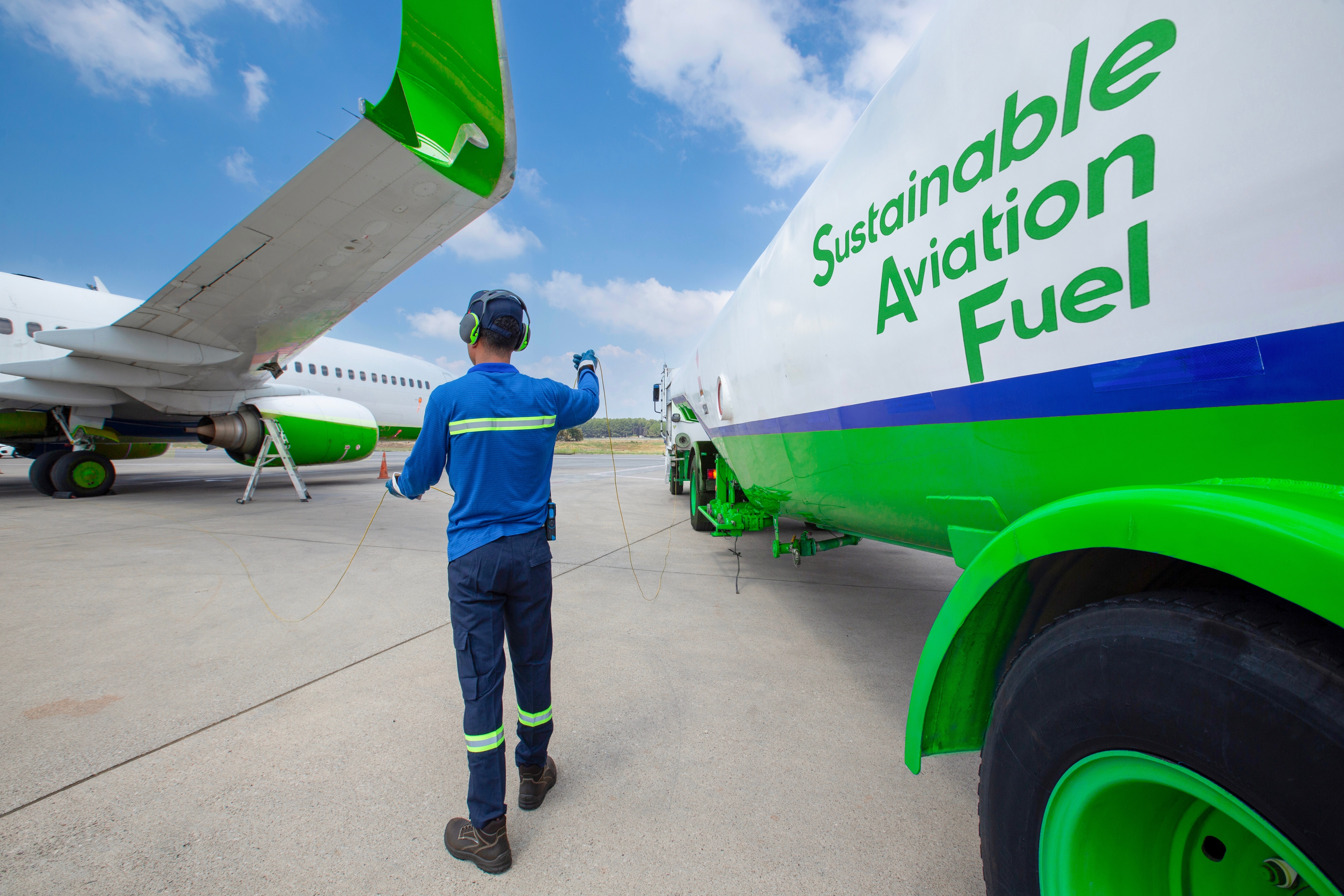
Aviation: While SAF can be blended up to 50% with conventional jet fuel in existing aircraft and infrastructure, higher blend ratios require engine modifications and new fuel system materials. Boeing and Airbus are testing 100% SAF compatibility, with certification expected by 2030.
Shipping: E-ammonia and e-methanol require new fuel systems, safety protocols and crew training. Maersk has committed to using e-methanol in 12 new container vessels, driving infrastructure development at major ports like Copenhagen and Los Angeles.
Heavy transport: E-diesel and e-methanol can leverage existing refueling infrastructure with minimal modifications, enabling faster market adoption.
Refining and purification technologies
Advanced separation technologies are crucial for producing fuel-grade e-fuels that meet strict quality specifications. Modern e-fuel facilities employ:
- Distillation columns with advanced packing materials to achieve 99.9%+ purity
- Membrane separation for hydrogen purification and CO₂ capture
- Adsorption systems to remove trace impurities
- Catalytic upgrading processes to optimize fuel properties
Policy support: creating market demand
Government policies are essential for creating a viable market for e-fuels by establishing demand mandates, providing financial incentives and implementing carbon pricing mechanisms.
Regulatory frameworks and mandates
European Union: The ReFuelEU Aviation regulation mandates that 2% of aviation fuel must be synthetic by 2030, rising to 63% by 2050. Similarly, the FuelEU Maritime regulation requires a 6% reduction in shipping fuel carbon intensity by 2030.
United States: The Inflation Reduction Act 45Z provides up to $1 per gallon in tax credits for SAF production, while California's Low Carbon Fuel Standard creates additional revenue streams for low-carbon fuels.
International aviation and shipping: The International Civil Aviation Organization (ICAO) has set a goal of net-zero emissions by 2050, while the International Maritime Organization (IMO) targets net-zero shipping emissions by approximately 2050.
Carbon pricing and financial incentives
Effective carbon pricing makes e-fuels more competitive by internalizing the environmental costs of fossil fuels:
- EU Emissions Trading System: Carbon prices have reached €80-100 per ton, significantly improving e-fuel competitiveness
- Carbon border adjustments: Proposed mechanisms that would protect domestic e-fuel producers from unfair competition
- Green financing: Development banks and private investors are providing low-cost capital for e-fuel projects, with over $15 billion committed globally
Offtake agreements and market certainty
Long-term purchase agreements provide the revenue certainty needed for large-scale investment:
- Airlines: Delta, United and Lufthansa have signed multi-billion-dollar SAF purchase agreements
- Shipping: Maersk and other major carriers are securing e-methanol supply contracts
- Industrial users: Chemical companies are contracting for e-methanol and e-ammonia as feedstocks
Maximizing efficiency and yield through separation technologies
Advanced separation and purification technologies are critical for achieving the high purity levels required for commercial e-fuels while maximizing production efficiency.
Breakthrough technologies
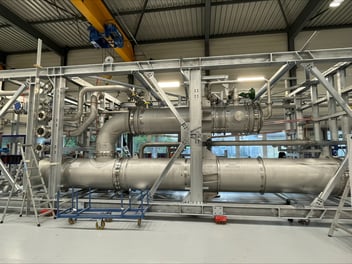
Advanced distillation: New column internals and process intensification techniques can reduce energy consumption by 20-30% while improving separation efficiency. Structured packings and dividing wall columns enable more precise separations with lower capital costs.
Hybrid separation systems: Combining multiple separation technologies optimizes overall process efficiency. For example, integrating membrane pre-separation with distillation can reduce overall energy consumption by 25-35%.
Process integration and optimization
Modern e-fuel facilities employ sophisticated process integration to maximize efficiency:
- Heat integration: Advanced heat exchanger networks recover waste heat, reducing overall energy requirements by 15-20%
- Digital optimization: AI and machine learning optimize operating conditions in real-time, improving yield and reducing energy consumption
The road ahead: scaling challenges and opportunities
Despite challenges, the e-fuel industry is experiencing unprecedented growth. Global e-fuel production capacity is projected to reach 10 million tons by 2030 and 300 million tons by 2050, requiring over $1 trillion in investment.
Key success factors for commercial-scale deployment include:
- Continued cost reduction through technology advancement and scale-up
- Supportive policy frameworks that create long-term market demand
- Strategic partnerships between producers, technology providers and end-users
- Infrastructure development coordinated across the entire value chain
- Technological breakthroughs in separation, catalysis and process integration
Sulzer Chemtech plays a crucial role in this transition, providing advanced separation and purification technologies that make commercial-scale e-fuel production possible. Our expertise in mass transfer, heat transfer and process optimization is helping overcome the technical barriers to large-scale deployment.
As demonstrated by successful projects like European Energy's e-methanol facility, the path to commercial-scale e-fuel production is becoming clearer. With continued technological advancement, supportive policies and strategic investment, e-fuels will play an increasingly important role in achieving global decarbonization goals.
Ready to accelerate your journey to commercial-scale e-fuel production?
Contact Sulzer Chemtech’s separation technology experts to explore how our solutions can help you scale efficiently while meeting regulatory targets. bioflux@sulzer.com
Read on here:
- Sulzer technology enabling sustainable aviation fuel production in China
- Sulzer enables production of three billion liters of renewable fuels...
- Leading biofuel plant grows renewable fuels offering, thanks to Sulzer
Have Questions or Need More Information?
We're here to help! Whether you have questions about our solutions or want to discuss how we can support your specific needs, feel free to reach out.