

white-line

Crystal clear purification for your most demanding separation challenges

Reduce energy consumption by up to 6 times, eliminate thermal degradation, and achieve purity levels distillation cannot reach.

Purity up to
99.99 wt%

Including close boilers and isomers that distillation cannot resolve.

Up to 6x
lower energy use

Solidification heat is 3 to 6 times lower than vaporization, cutting operational costs.

Zero solvents, zero emissions 

Solvent-free and emission-free by design. Simpler compliance, smaller environmental footprint.

Inside the brochure: How smart manufacturers reduce purification costs, eliminate product degradation, and meet the tightest purity specs.


  • Cut CAPEX and OPEX with simplified process design.
  • Achieve ultra-high purity where distillation fails.
  • Eliminate thermal degradation and oligomerization risk.
  • Handle bio-based and recycled feedstocks confidently.
  • Go from lab feasibility to commissioned plant in under 24 months.
  • Select from 3 proven crystallization technologies.
Sulzer Chemtech fractional crystallization brochure cover and interior pages

Sulzer has commissioned more than 80 melt crystallization plants worldwide. Your process could be next.

80+
Plants commissioned worldwide
300+
Products tested
in our labs
50+
Years of
expertise
3
Crystallization technologies

From oil-based to bio-based to recycling streams: Sulzer develops the right purification solution for your feedstock and your purity target. Ready to talk? Contact us at crystallization@sulzer.com.

Proven across industries and feedstocks

Acrylic acid and para-xylene
High-volume petrochemical purification requiring purity levels and separation precision that distillation alone cannot provide.


Lactide and bioplastics
Sulzer pioneered industrial lactide crystallization in the 1990s, with proven purification of all three isomers for bioplastic production.


Caprolactam from Nylon 6 recycling
Falling film crystallization restores recycled caprolactam to virgin-equivalent quality, enabling closed-loop fiber production.


Bisphenol A, MDI, phosphoric acid and more
A broad and growing portfolio covering specialty chemicals across petrochemical, pharmaceutical, and industrial sectors.
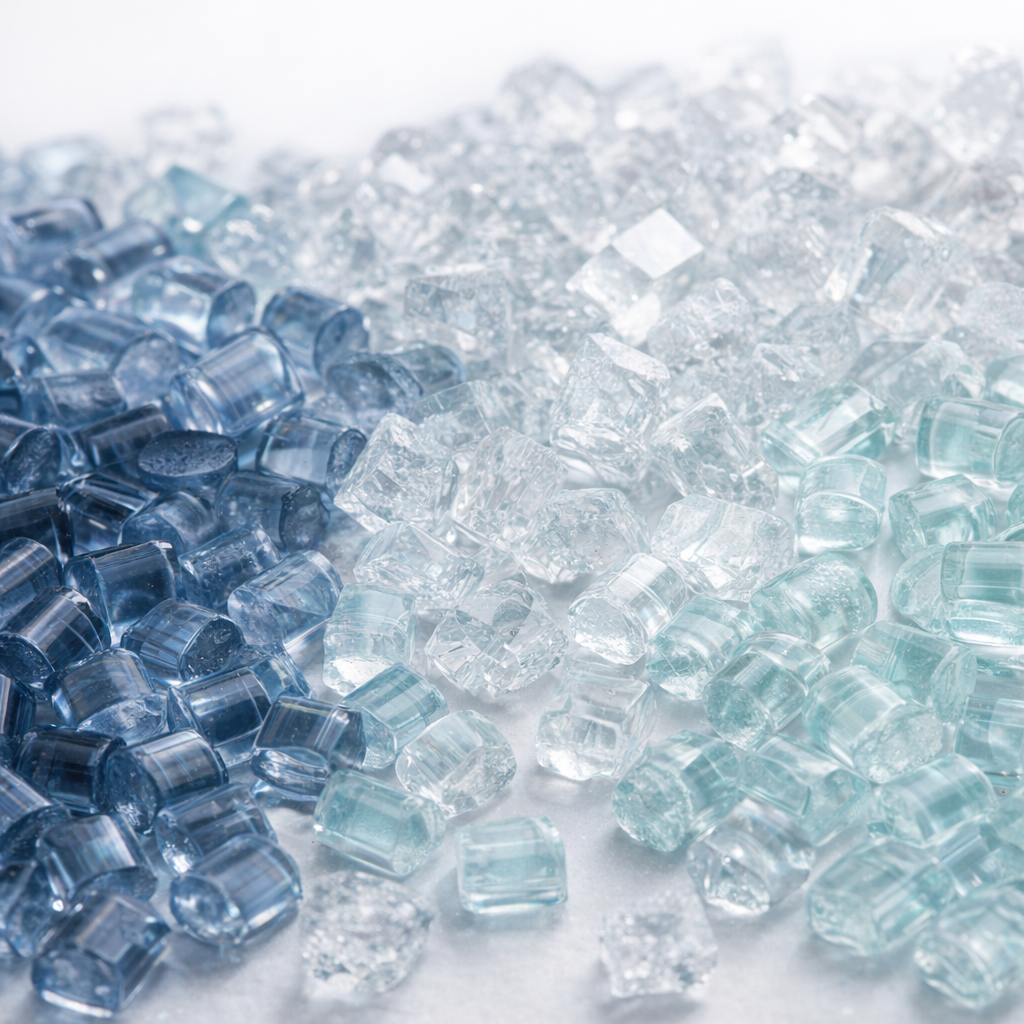
 

Translucent crystallized chemical compounds in blue and clear tones, result of Sulzer melt crystallization purification process
Questions? We have your answers.
Can melt crystallization handle my specific compound?
Sulzer has tested more than 300 products in its laboratories. The process starts with a simple bottle test, followed by bench-scale and pilot-scale evaluation. Contact our team to initiate a feasibility assessment for your compound.
How does crystallization compare to distillation for close boilers?
For components with near-identical boiling points, distillation requires extremely high reflux ratios and column heights, often making it economically unviable. Crystallization separates based on melting point differences, allowing ultra-high purity even when vapor pressures are almost identical.
What are the three crystallization technologies Sulzer offers?
Sulzer offers static crystallization (crystals grow from a stagnant melt), falling film crystallization (melt circulates downward over a cooled surface), and suspension crystallization (crystals grow freely in the melt, separated via a proprietary wash column). Technology selection is based on thermodynamic characteristics, purity requirements, capacity, and available footprint.
How long does it take from initial test to industrial commissioning?
For new applications, Sulzer can take a compound from lab feasibility test to commissioned industrial plant in less than 24 months. The three-stage evaluation: bottle test, bench-scale test, and pilot test, generates all process design data required for the full engineering package.
Is crystallization suitable for bio-based and recycling feedstocks?
Yes. Bio-based and recycled feedstocks often contain complex impurity profiles and heat-sensitive components poorly suited for distillation. Crystallization operates at low temperatures, eliminates thermal degradation risk, requires no solvent addition, and handles varied impurity profiles found in fermentation streams and chemical recycling outputs.