Why treating process wastewater as a waste problem is costing chemical plants more than they think
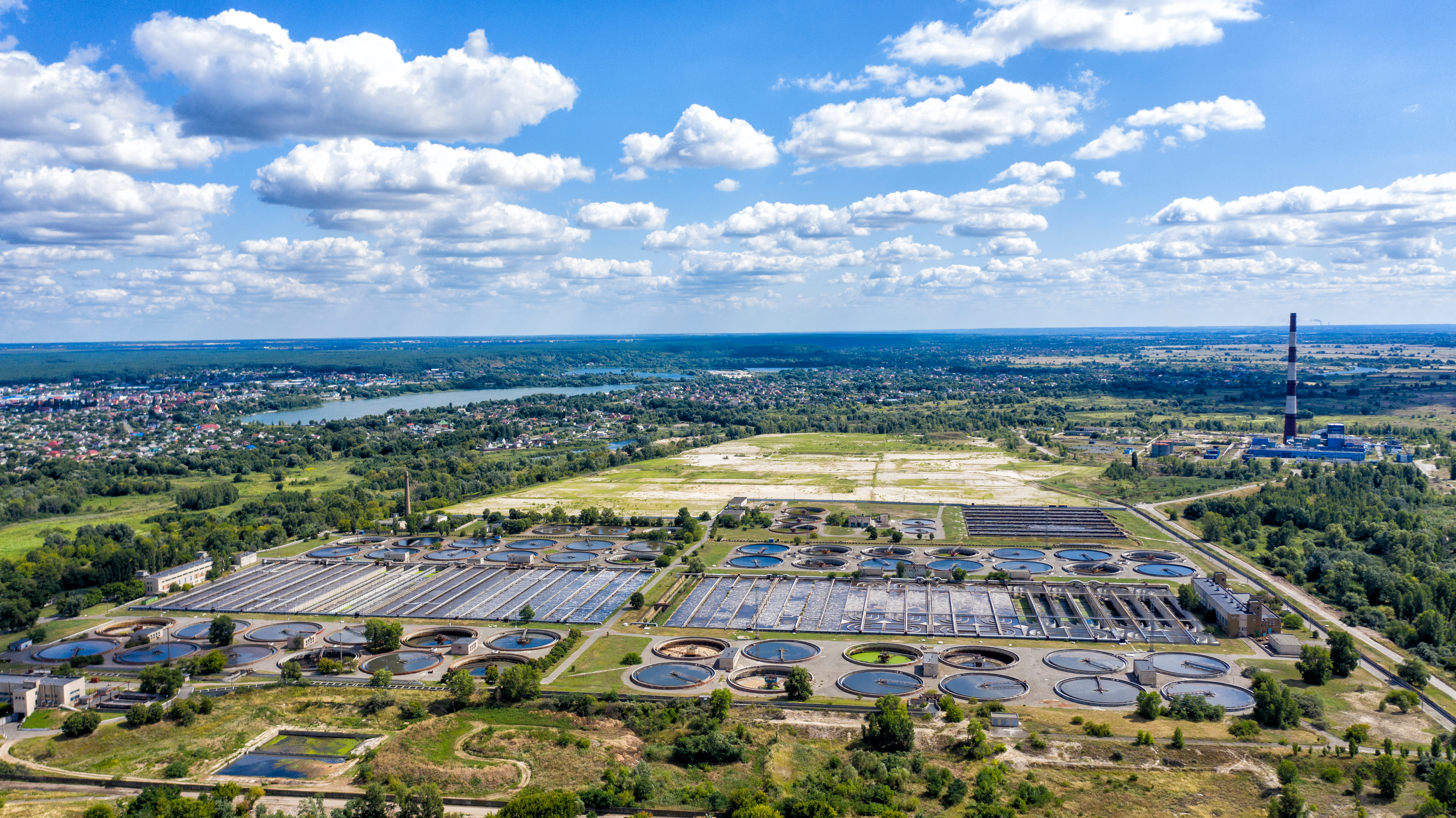
Walk through most chemical plants and you’ll find the same story: somewhere downstream of the main process sits a holding basin, a biological treatment unit, or a third-party incineration contract. Contaminated process water, loaded with organic solvents, acetic acid, NMP, phenols, or agrochemicals, gets routed there once the useful chemistry is done. It has always been the tail end of the process, treated as a liability rather than an asset. That perception is now expensive to maintain.
Globally, around 380 billion cubic metres of wastewater are generated every year, a figure projected to jump 51% by 2050. For industrial operators, the pressure is compounding from two directions simultaneously. Regulatory requirements are tightening, the UN Sustainable Development Goal 6 targets a 50% reduction in untreated chemical discharges into the environment by 2030. And the economics of the default solutions, biological treatment, thermal evaporation, incineration, are becoming increasingly difficult to justify, particularly in energy-intensive regions.
The limits of the conventional toolkit
Biological treatment works well within a narrow band of conditions: dilute streams, primarily biodegradable organics, stable feed composition. Step outside that band, introduce NMP, DMF, chlorinated solvents, or high-concentration organic acids, and the biology struggles or fails. The organisms that drive the process are sensitive to toxic loads, and recovery from an upset event is slow. As chemical plants handle increasingly complex and variable process streams, biological treatment is becoming a first-line option that often cannot serve as the only line.
Aeration alone accounts for 50–80% of energy costs in conventional wastewater treatment, making thermal alternatives look attractive until the real numbers appear. Incinerating aqueous organic waste streams demands substantial fuel input, water doesn’t burn, it absorbs energy, and building dedicated incineration capacity typically costs between USD 190 million and USD 1.2 billion per million tonnes of annual capacity, placing it firmly in the category of infrastructure that cannot easily be right-sized to a single plant’s waste stream. Contracting incineration out transfers the cost without eliminating it.
What both approaches share is a fundamental framing problem: they treat contaminated process water as something to be disposed of. The organic compounds in that water, acids, solvents, recoverable chemicals, have economic value if they can be separated efficiently. Sending them to a burner or a biology basin destroys that value permanently.
Matching the treatment to the contamination
The engineering insight that changes this calculus is simple: different contaminants have different optimal treatment routes, and the choice made at design stage determines both the OpEx and the environmental footprint for the life of the facility.
Light-boiling compounds, alcohols, chlorinated solvents, ketones, ethers, are separable by evaporation at relatively low energy cost. Heavy-boiling organics such as acetic acid, phenols, DMF, and NMP are harder; they stay in the aqueous phase through evaporation and require extraction-based approaches to pull them out selectively. Streams contaminated with hazardous or high-toxicity compounds that resist both evaporation and extraction present a third category, these are the candidates where concentration technologies, rather than separation, are the right first step, bringing down the volume before any final treatment step.
Then there is the question of salts and metals. For facilities that need to meet zero liquid discharge targets, discharging only purified water and dry solids, with no liquid effluent stream at all, crystallisation-based separation can achieve what evaporative ZLD approaches require exotic materials and extreme operating conditions to reach.
A toolbox approach, not a single technology
Sulzer Chemtech’s integrated process water portfolio addresses these distinctions directly. OptimEXT™ uses liquid-liquid extraction to recover heavy-boiling organic chemicals, acetic acid, DMF, DMAC, NMP, agrochemicals, returning them as purified product streams rather than waste. PEMFlux™ handles light-boiler evaporation for streams containing volatile organics alongside salts, with a design that tolerates wide feed rate variations without process upset. For streams where the contamination is hazardous and the target is volume reduction ahead of incineration or further treatment, freeze concentration offers a notably lower energy footprint than thermal evaporation, crystallisation is thermodynamically more efficient than boiling, requiring roughly a fifth of the energy per kilogram of water removed. And for facilities targeting true zero liquid discharge, Sulzer’s ZLD process separates single salts from mixed streams at milder operating conditions than conventional high-temperature evaporation, avoiding the need for exotic alloys and the maintenance complexity they bring.
The practical value of this toolbox is that the right technology depends on what is in the water, and a facility with multiple contaminated streams rarely has just one type. What Emanuele Dal Pos, Sulzer’s specialist in chemical wastewater solutions, describes as the diagnostic step is a structured questionnaire: what contaminants, what concentrations, what the current disposal route costs, and what the target condition for the treated water is. From those inputs, the right combination of technologies, and which should be handled by Chemtech versus by Sulzer’s Flow division for physical pre-treatment, becomes straightforward to map.
The question to ask before the next disposal contract renewal
Industrial facilities that implement advanced treatment techniques reduce untreated wastewater discharge by up to 70%, while simultaneously opening the door to cost recovery on chemicals that were previously written off as waste. As energy prices remain elevated across Europe and parts of Asia, and as ESG reporting requirements make wastewater performance visible to investors and customers, the economics of proper chemical treatment are improving relative to the economics of disposal.
The starting point is understanding what is actually in the water. Most facilities have characterised their wastewater streams to some degree, but characterisation for disposal compliance and characterisation for recovery potential are different exercises. The second one often reveals options that the first one never surfaced.
Learn more about Sulzer fractional crystallalization solutions here
Learn more about Sulzer OptimEXTTM here
Learn more about Process Water Treatment Solutions
Have Questions or Need More Information?
We're here to help! Whether you have questions about our solutions or want to discuss how we can support your specific needs, feel free to reach out.